Rickee_Gutierrez
Rickee Gutierrez

My Cybersecurity Internship



Vietnam Veterans Memorial Fund
Quick Facts
The Vietnam Veterans Memorial Fund preserves the legacy of Vietnam War veterans.
It honors those who served and provides a place for reflection and healing.
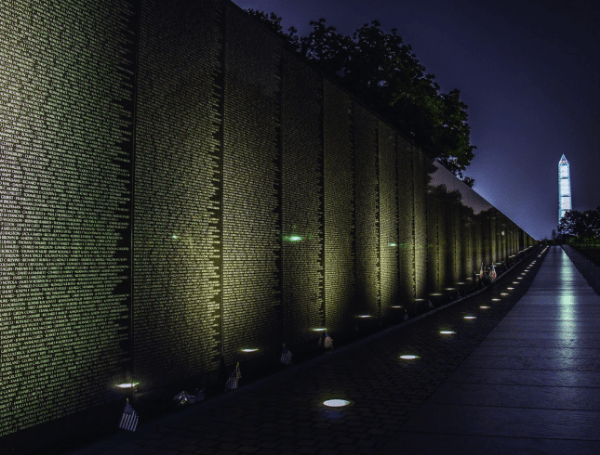
The VVMF educates the public about the war’s impact on American society and maintains the iconic Vietnam Veterans Memorial, including the “Wall” and related memorials.
Programs like the In Memory Program, Education Center, and outreach initiatives promote awareness, healing, and honor the sacrifices of veterans, their families, and communities affected by the war.
Vietnam Veterans Memorial Fund
About the Nonprofit
The Vietnam Veterans Memorial Fund was established to honor and remember the men and women who served during the Vietnam War. Its primary focus is supporting the construction, preservation, and ongoing maintenance of the Vietnam Veterans Memorial in Washington, D.C.
The fund is dedicated to preserving the history, legacy, and stories of those who served during the conflict.
Additionally, VVMF supports educational and outreach programs that raise awareness about the Vietnam War era, ensuring that the sacrifices of veterans are remembered, honored, and deeply respected by current and future generations.

Vietnam Veterans Memorial Fund
Community Involvement
The Vietnam Veterans Memorial Fund works closely with veterans, families, historians, volunteers, donors, and government entities to support its mission. Its dedicated staff coordinates events, fundraising, and program management to maintain the Memorial and advance educational efforts nationwide.
VVMF partners with veteran organizations such as the American Legion and VFW, the National Park Service, educational institutions, and corporate sponsors.
These collaborations provide essential resources and funding for initiatives like the Education Center and Wall of Faces project, strengthening the Memorial’s role in honoring veterans and educating the public about the Vietnam War’s lasting legacy.
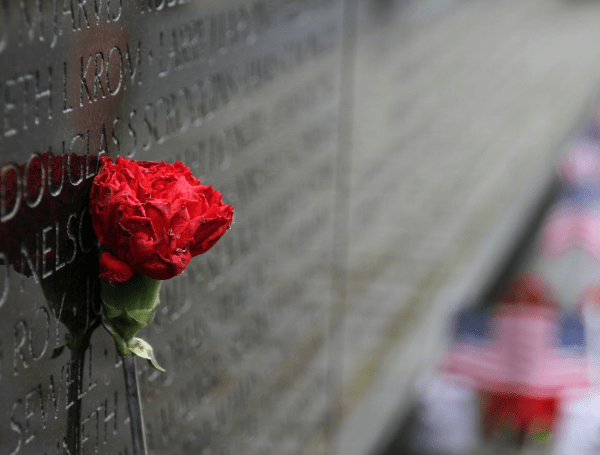
Vietnam Veterans Memorial Fund
Current Vulnerabilities
The Vietnam Veterans Memorial Fund faces important cybersecurity concerns related to protecting sensitive data and maintaining secure digital operations.
Protecting personal information, including service records and family stories, is critical to prevent unauthorized access, data breaches, and potential identity theft. Online donation security is a top priority, with encrypted payment gateways ensuring donor information is safeguarded at all times.
The organization also remains vigilant against ransomware, denial of service, and other cyberattacks that could disrupt access to digital resources and educational materials. By addressing these vulnerabilities proactively, VVMF aims to protect its mission and maintain public trust effectively.
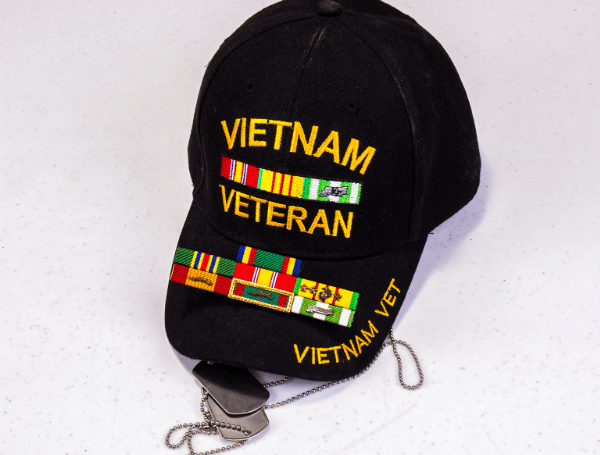
My Security Presentation
During the Cybersecurity & Defense Internship, I worked with Beth Cerrone and Jamie Kreider to learn the basics of cybersecurity and explore its practical applications.
Throughout the week, I worked with a nonprofit to develop cybersecurity solutions to protect against various cyber threats. I worked with my team to analyze the threats to the organization and then developed a comprehensive solution.
At the conclusion of this internship, our team pitched the final proposal to the Leadership Initiatives Grant Committee, earning a microgrant to support the implementation of our proposal.
My Security Proposal
Throughout the program, we worked closely with the Vietnam Veterans Memorial Fund to gain a clear understanding of their goals. These meetings provided valuable insights into critical gaps within their cybersecurity system and the potential risk they pose to the operation of their business.
The most pressing issue facing the Vietnam Veterans Memorial Fund is the lack of a comprehensive cybersecurity framework, including no password policy, inconsistent patch management, BYOD security gaps, a lack of a detailed incident response plan, and outdated devices, which significantly undermines its ability to protect sensitive data and maintain operational continuity.
To address this issue, we developed a comprehensive security proposal that included a SWOT analysis of the Vietnam Veterans Memorial Fund’s current situation. Drawing on international cybersecurity standards, I proposed implementing immutable storage, which provides extra security by keeping consumers’ information safe from alteration or deletion, along with a kill switch feature for rapid containment in case of a breach. To implement this, we will configure Box to use Druva for immutable storage, deploy Huntress Security to enable direct interaction with a dedicated cybersecurity team for threat hunting and remediation, and install Microsoft Intune on all company devices to manage and secure endpoints effectively. The goal of these solutions is to safeguard customer data integrity, improve threat detection and response capabilities, and maintain trust by ensuring sensitive information remains secure and recoverable under all circumstances.
Internship Highlights
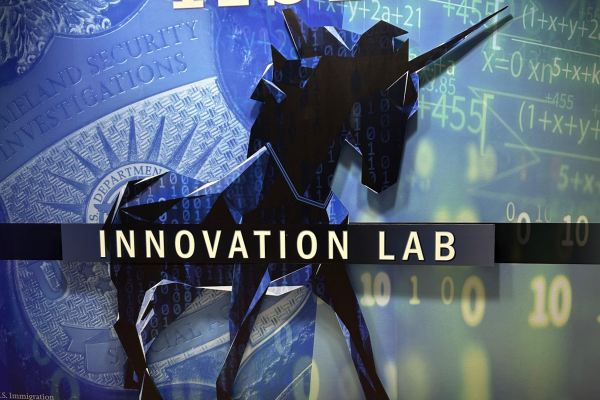
I was given the unique opportunity to take exclusive tours of multiple government and security sites to speak directly with security professionals. During these tours, I was able to witness firsthand how cybersecurity operates at the national and international level.
I was able to visit the United States’ Security Innovation Lab. Throughout this visit, I was able to learn firsthand from government officials regarding how the government funds and establishes cyber-intelligence and cyber-counterintelligence technology.
We also toured the Homeland Security Investigations' (HSI) Technical Operations Center. During this visit, we learned how the government uses technology to track major crimes including wire-fraud, human trafficking, child exploitation, and more.
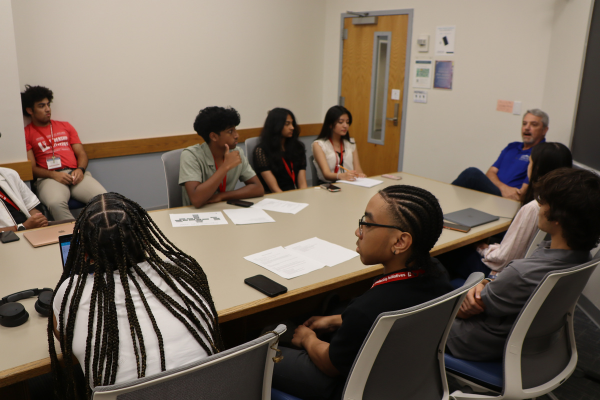
In order to apply the skills I learned throughout the internship, I worked directly with a nonprofit based in the Washington D.C. area to discuss their company's cybersecurity needs.
After three meetings where I walked through the organization model, protected information, and staff training of the nonprofit, I worked with my team to create a staff training protocol and threat analysis for my partner.
At the end of the internship, I advocated for, and received funding for, my nonprofit partner to implement the cybersecurity training protocols so they can best protect their client information and continue to develop with a reduced fear of cyber attacks and cybersecurity threats.
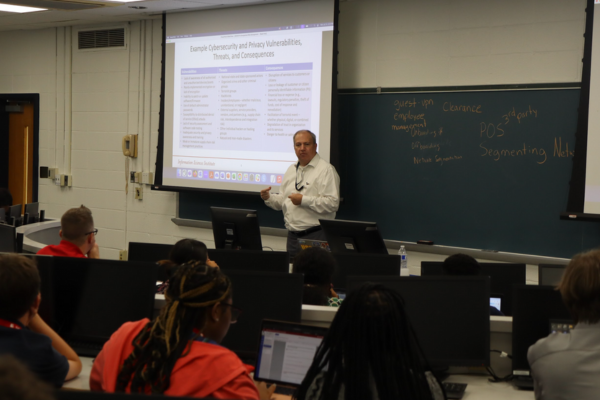
To learn more about the world of cybersecurity, I was given the unique opportunity to speak directly with cybersecurity experts from multiple organizations and backgrounds.
I worked directly with one of the leading consultants in Cyber Threat Management, and a lead Cyber Consultant from Ernst & Young, Phuong Nguyen, to learn about common threat assessment and cybersecurity counterintelligence. I also heard from the Director of Government Compliance for KPMG, Lisa Mathews, and the lead SME for the FutureG Initiative for the Department of Defense, Dr. Dan Massey.
Throughout the internship, I also heard presentations from and spoke with representatives from the Department of Defense, Department of Homeland Security, and the National Security Agency. To learn the physical side of cybersecurity, we also had the unique opportunity to meet with globally recognized penetration testers and network threat assessors.
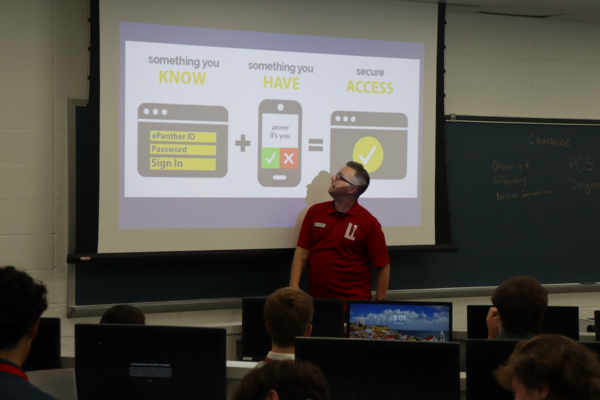
In order to put the skills we learned to the test, I had the unique opportunity to work with cybersecurity software typically used in graduate-level instructional courses. This provided me with a hands-on environment to develop and apply a wide range of cybersecurity skills.
I began with network cybersecurity, completing labs focused on network security and Linux to gain a deeper understanding of how networks communicate and where vulnerabilities may arise. This experience highlighted the ways in which cybersecurity threats can disrupt or compromise these communications, reinforcing the importance of proactive defense measures.
Building on these Linux skills, I participated in capture-the-flag coding competitions and explored virtual rooms designed to simulate real-world cybersecurity challenges. These activities tested both my technical abilities and problem-solving skills, allowing me to apply classroom concepts in practical, scenario-based settings.